
For the Love of Dog Book Review
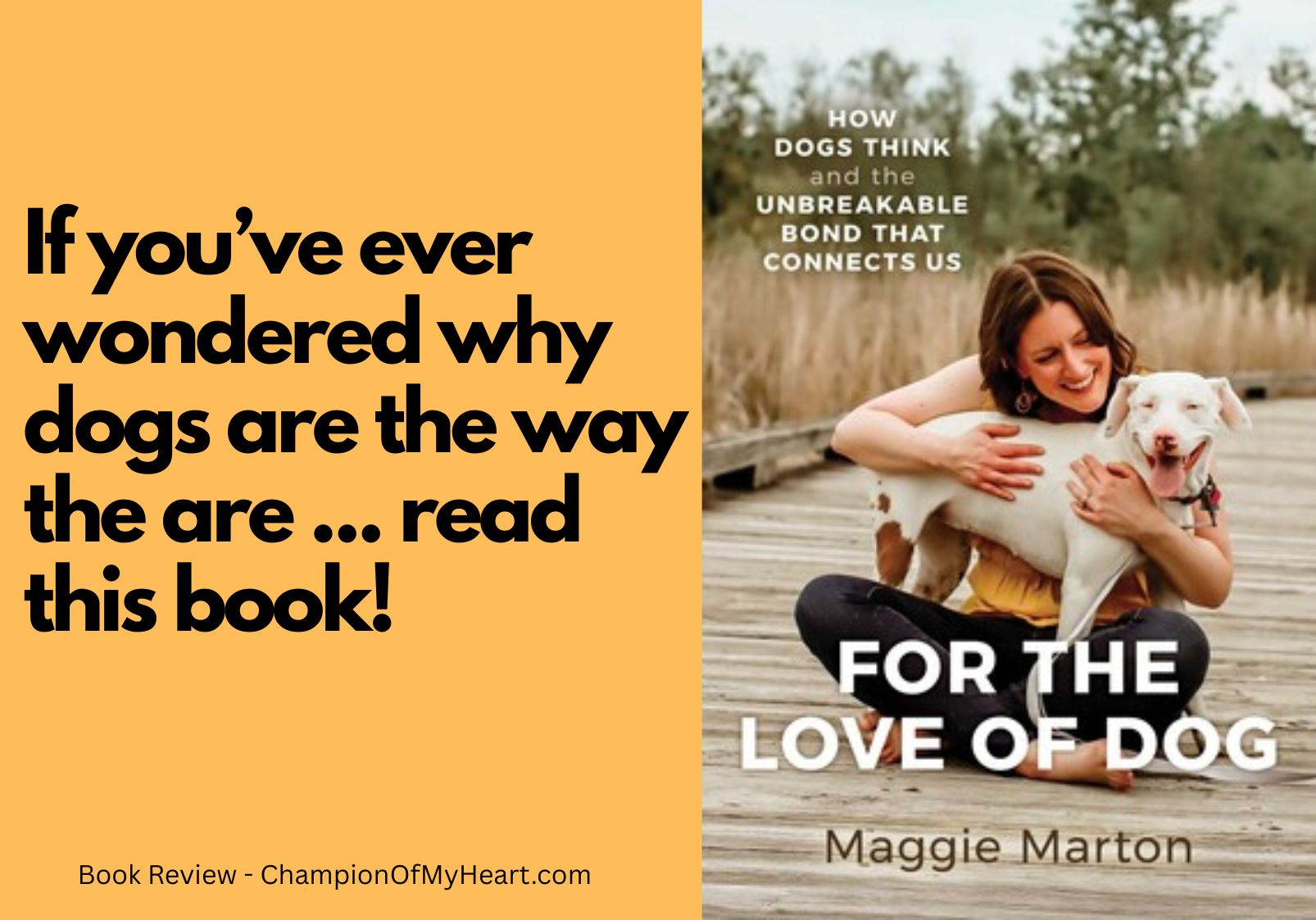
If you’ve ever wondered how we ended up with the dogs we love at our sides, what we know about their unique abilities (thanks to science), and how they help us survive all the things, then I hope you enjoy this For the Love of Dog book review.
The book is part memoir, part research paper, and part life stress and pet loss treatise. It’s written by Maggie Marton, who also authors “Oh My Dog!” She’s a pal and a colleague; a dog and kiddo mom extraordinaire; dog nerd and cancer survivor. She understands and reveals a lot in this book. It’s subtitle is How Dogs Think and the Unbreakable Bond That Connects Us. You will cry a little. I did. But, you will also laugh out loud and learn a lot.
Deeply Researched, Deeply Felt
Marton weaves together these deeply researched and deeply felt elements into a story that will, at times, take your breath away:
- Science of how dogs came to be our companions
- What we know about their abilities
- What dogs reveal about our own behavior and feelings
- Lives of 3 of her past dogs – Emmett, Lucas, and Cooper
- Truth of her own lengthy experience with cancer (melanoma)
- Reality of 2 of 3 dogs being diagnosed with cancer, kind of at the same time
Revealing Things About Us Too
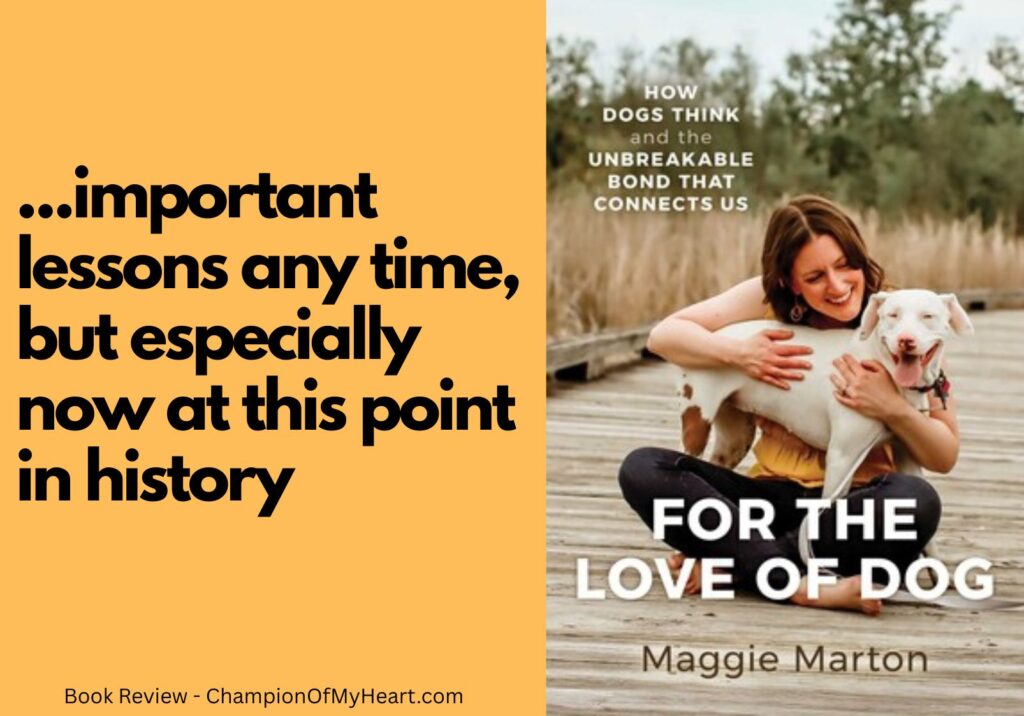
For the Love of Dog by Maggie Marton digs into everything we know, so far, about why we love dogs so much and why they are the way they are. Through her own life story and those of her dogs, Marton shows how dogs reveal their true and amazing selves to us … and how being with them, learning from them, loving them also helps us understand ourselves better, and all of humanity really too. Those are important lessons any time, but especially now at this point in history. Yes, I did cry a little reading the book, but I also laughed out loud at times. If you love dogs and want to know more, read this book. If you’re in the midst of struggles in your own life or with your dogs, read this book. It will help you feel less alone.
One of My Favorite Parts
Amid the many studies about dogs that Marton cites, the one about whether or not dogs have “other-regarding” abilities is one of my favorites. In other words, do they act only for self benefit, or do they have the ability to make decisions to help others?
The answer from one study is yes.
Marton writes, “They set up an experiment where dogs were trained to pull one of two levers: one gave a treat to another dog and one gave nothing to the other dog. The puller dog got nothing in either scenario. The question was simple: Would the puller dog give treats to another dog without any rewards or motivations for himself?”
She goes on to say, “The authors reported it was rare for a dog to pull the empty tray. They most often gave each other treats, and when the pair of dogs knew each other, the rate of treat-giving went up even higher. The authors concluded that their experiment showed, yes, dogs are other-regarding.”
Oh, I Disagree
Marton writes about how dogs don’t care or don’t mind about a lot of things about us, including the kind of music we listen to. I had to laugh. I even sent her a note that basically said … “Oh, I beg to differ!”
You see, our late Ginko had distinct music preferences. I wrote the following in his obituary.
“Lover of Rock music. Hater of Bluegrass.”
You see, Ginko would get up and leave the room if I turned on Bluegrass. He did not like it one bit and made his opinions known! (ha ha)
Tough Times and For the Love of Dog
In addition to her own experiences with cancer, several surgeries, and a year of chemo, Marton writes about life with anxious, fearful, and/or reactive dogs. She describes the struggles that many of us have had with navigating the world (of often clueless people and rude dogs) with our dogs who don’t always cope well with the stressors of modern living, resulting in people kind of being awful.
Pet Loss and Our Own Mortality
Especially in the final chapters of the book, Marton writes about pet loss and grief in ways I recognize from my own experiences, including how others get impatient with our pain. She also describes it as a house with many corridors and rooms that you never really leave.
She slips in a comment from her husband fairly late in the book about how her own life hung upon a 1 millimeter difference between treatable and not. That reality shifted Marton’s perspectives on a lot of things, and the book reflects that and more.
At the very end, she describes the first dream she has of Lucas after he dies. I won’t spoil it for you, but it’s really something. Just a few paragraphs that may just change your life.