
New World Screwworm FAQ for Pet Lovers
Good grief. Not what anyone wants to talk about, but it seems like we all need a new world screwworm FAQ for pet lovers to keep everyone safe and calm. I gathered these answers from various (linked) sources. Maybe bookmark this post for later reference, as needed. It includes some current stats and maps.
What is a new world screwworm?
Well, it isn’t a worm at all, but the larva of parasitic fly that feed on the living tissue of warm-blooded animals – typically in open wounds or mucous membranes.
Why are new world screwworms suddenly in the news in summer 2026?
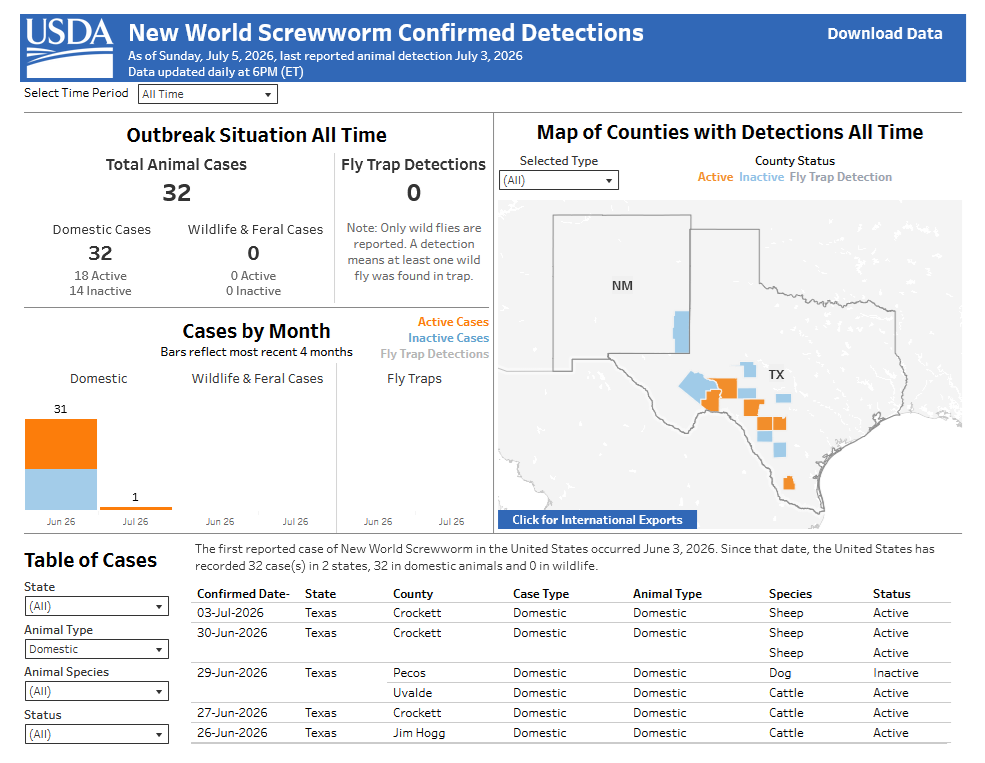
New world screwworms are suddenly in the news because of new cases found in cattle in Texas and a dog in Lea County, New Mexico, that’s like 400 miles from the cattle cases. The USDA now has an interactive map that shows “infested zones.”
Before this outbreak, the new world screwworm had been eradicated in the US since 1966.
Pulled this updated graphic on July 6, 2026.
Are these new world screwworms (NSW) a danger to pets?
Yes. New world screwworms are a danger to pets, especially outdoor cats. The first case in the US in a pet is a dog in New Mexico.
Can people get new world screwworm infections?
Yes, people can get new world screwworm infections. It’s very rare, though.
What are the symptoms of new world screwworm infections or infestations?
The symptoms of possible new world screwworm infections or infestations include the following (source):
- Foul-smelling wounds
- Animals biting or licking at their bodies
- Lesions in in places like inside the ears or broken skin
- Unusual restlessness or lethargy
- Visible maggots or larvae
Do routine external parasite protection products for pets protect against new world screwworm?
No. An article for veterinary practitioners says, “Routine use of antiparasitics with known or suspected efficacy against NWS are not likely to prevent infestation because they do not repel flies or kill eggs immediately. Drugs with activity against NWS might reduce impact through early killing of larvae as they feed on tissue, reducing the severity of damage; however, clinical data are lacking.” (source)
That said, the benefit of things like flea and tick preventives is that they help lessen any scratching pets might do because of flea or tick bites. Less scratching means less areas of broken skin that could become a breeding ground for NWS.
How can pet lovers protect their pets?
Most pets in most places, right now, are safe from NSW. That said, it’s always a good idea to check your pets’ bodies and mucous membranes for any cuts, other damage, lumps, inflammation, and such. If you’re concerned at all about anything you find, make a veterinary appointment right away.
Having dealt with Cuterebra (or botflies) in a couple of our dogs in the past, I know it’s gross, and these new world screwworms sound much worse since they lay larvae directly on animals vs pets picking up botfly larvae from the environment.
Can pets get new world screwworm from food?
No, according to the USDA website: “Screwworms do not infest meat, fruits, vegetables, or other food sources.”
How does the new world screwworm outbreak affect animal transport?
My friends and colleagues at AAHA have been tracking that. First, the USDA banned even pet dogs from traveling into Mexico. A few days later, they reversed that position.
For one of my friends who lives in Mexico, who is currently visiting family in Colorado, the reversal is good news so that she can fly back home, with her kiddo and her dog.
Are rescue groups halting adoptable pet transports from affected states?
That’s a good question. I did see rumblings from some rescue groups in New York saying that they won’t take dogs or cats from places like Texas or New Mexico. Let me know if you hear of others implementing transport bans for pets from areas with NWS cases.
What do the parasitic flies look like?
Adult New World screwworms, Cochliomyia hominivorax, are “similar in size to, or are slightly larger than, the common house fly and have distinct orange eyes, a metallic blue or green body, and 3 stripes along the back.” (source)